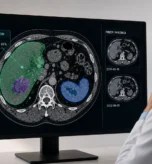

Radiology departments are experiencing growing image volumes, but reporting capacity is not keeping pace. The clinical cost of a delayed or missed finding is often measured in patient outcomes.
AI in radiology refers to the use of machine learning models, predominantly deep learning systems trained on large datasets of annotated medical images, to analyse imaging studies and support clinical decision-making. These systems identify patterns in CT scans, MRI sequences, X-rays, ultrasound studies and mammography images. The outputs they generate would otherwise require significant time from specialists.
For most healthcare organisations, the underlying models already exist. Radiology AI applications are live in hospitals today, and the peer-reviewed evidence supporting their use continues to grow. The more consequential challenge is not whether AI can work in radiology, but what it takes to build or procure systems that perform reliably in clinical practice.
That distinction separates a model that performs well on a validation benchmark from one that withstands the realities of deployment. Model architecture rarely explains the gap. The data used to train the model and the infrastructure that supports it in production explain it far more often.
This article explores that gap: what it looks like, why it exists, and what organisations must put in place to close it.
Where AI Is Delivering Value in Radiology Today
The use cases in which radiology AI generates measurable clinical value are specific, not general. Understanding where these systems work and what enables that performance is where any serious implementation begins.

1. Cardiac Imaging
AI automates the measurement of cardiac structures, including left ventricular volume, ejection fraction and myocardial mass. These tasks take considerable time and vary from one observer to the next when done manually. Reliable cardiac AI depends on precise boundary annotation from specialists who understand exactly where one structure ends and another begins.
2. Brain Tumour Classification
Models learn to identify imaging characteristics associated with specific tumour types, supporting case prioritisation and differential diagnosis. These systems require annotation across multiple MRI sequences, including T1, T2, FLAIR and contrast-enhanced imaging. This also includes clear protocols for agreement on ambiguous lesion boundaries. When annotators disagree on the same case, label reliability drops.
3. Vertebral Fracture Detection
Subtle vertebral fractures are often underreported at scale, not because radiologists lack expertise, but because increasing workloads leave less time for detailed spinal review. AI trained on carefully annotated spinal datasets can flag findings for specialist attention, provided the training data captures fracture patterns across age groups, imaging protocols and scanner types rather than a single patient group.
4. Alzheimer’s Disease and Neurodegenerative Imaging
Models in this domain identify imaging signs linked to disease progression, including loss of brain tissue, shrinking of the hippocampus and changes in white matter. The annotation challenge here is tracking change over time: training data must capture multiple points across a patient’s history rather than single snapshots.
5. Pneumonia Detection
Pneumonia detection is among the most mature diagnostic AI applications in radiology, making its limitations worth attention. Even well-validated models can perform worse when used on scanners, imaging protocols or patient groups that were not part of their training. Maturity does not guarantee reliable performance elsewhere; the training data does.
6. Stroke Triage
Large-vessel occlusion detection is one of the clearest examples of AI delivering operational value in a time-critical setting. Models that identify occlusion patterns within minutes of a scan can meaningfully reduce the time to treatment, but consistent performance depends on accurate annotation of blood vessel abnormalities across the variations introduced by different CT scanning protocols.
7. Radiation Dose Optimisation
Radiation dose optimisation sits in a different category. Rather than supporting diagnosis directly, these models improve image quality by reconstructing clear, diagnostic-grade images from lower-dose scans, with training focused on image quality rather than clinical annotation. At scale, the clinical impact is significant: lower radiation exposure for patients without compromising diagnostic quality.
What Operational Benefits Does AI Bring to Radiology Workflows?

AI helps radiology departments manage growing imaging volumes without proportional increases in specialist headcount. It reduces time spent on routine review, flags critical findings for priority and shortens the gap between image acquisition and clinical action.
These benefits depend on workflow integration and training data that reflects the clinical environment in which it will be used. When AI is deployed as a bolt-on tool or trained on data that doesn’t match the environment it runs in, the expected performance gains rarely materialise.
Why Does Clinical Context Matter as Much as Imaging Data?
Imaging data alone takes a model only so far, and the gap left behind shows exactly where clinical context has to step in.
The limits of pixel-only models
A model trained exclusively on imaging data operates on pixels. It learns to recognise patterns of intensity, shape and texture that correlate with clinical findings in its training set. What it cannot learn from images alone is the clinical context that a radiologist uses in every interpretation, often without being fully conscious of it.
When a radiologist reads a scan, they are not reading pixels. They are reading a patient. The image is one layer of a clinical picture, and the interpretation of any given finding shifts based on what surrounds it.
How patient context changes interpretation
Patient age shifts disease probability in ways that change how a finding should be weighted. A small pulmonary nodule in a 35-year-old non-smoker and the same nodule in a 65-year-old with a significant smoking history carry different pre-test probabilities. A model that produces the same output for both is not behaving as a radiologist would.
Prior imaging is the single most transformative contextual variable. A stable finding across two studies three years apart is managed differently from a finding new on today’s scan. The distinction between stability and change is one of the most important clinical signals in radiology, yet it is invisible to a model that sees only the current image.
Clinical history and presenting symptoms further alter interpretation. An acute-onset headache paired with a small hyperdense CT lesion suggests a subarachnoid haemorrhage requiring urgent escalation, yet a model without that clinical context might classify the same finding as incidental. The imaging is identical, but the clinical weight is not.
What Does Production-Ready AI in Radiology Actually Require?

Most AI initiatives fail because the data used to train those models misses how clinical decisions are made. What looks like a marginal data issue becomes a material risk the moment it enters a live clinical workflow.
These are the six requirements that determine whether a radiology AI system stays reliable after deployment.
1. Clinically validated annotation protocols
Model quality is bounded by annotation quality. A model cannot identify a finding more reliably than how its training labels define it, which is why annotation guidelines must be developed with input from specialist radiologists, clinically validated and applied consistently by every annotator working on the dataset.
When guidelines are ambiguous, annotators make different decisions about the same image, and those decisions become noise in the training data. The model inherits that inconsistency and performs unpredictably on precisely the case types where annotation disagreement was highest, usually the clinically important, ambiguous presentations. This is the primary way radiology AI fails in production.
2. Radiologist review loops
Specialist review embedded at key stages of the annotation pipeline, including guideline development, quality audit and edge-case adjudication, improves label reliability in ways that automated QA cannot replicate. When annotators encounter cases where the correct label is unclear, consensus workflows that escalate to a radiologist reviewer close inter-annotator agreement gaps.
3. DICOM normalisation
Imaging data from clinical environments varies substantially across scanner manufacturers, acquisition protocols, slice thicknesses, reconstruction kernels and metadata conventions. DICOM annotation and normalisation standardise this variability before training begins, because a model trained on un-normalised data partly learns to recognise scanner characteristics rather than clinical findings. When deployed on a scanner type not present in training, performance degrades, often in ways that don’t show up immediately in aggregate metrics.
4. Embedded quality assurance
QA that runs throughout the annotation workflow catches errors at a fraction of the cost of errors discovered during model validation or production deployment. In practice, this means sample audits, annotator calibration checks and label-consistency metrics applied continuously as the dataset scales. It also builds the documentation trail that regulatory review requires and internal governance depends on.
5. Auditability by design
Healthcare AI operates within regulatory frameworks, including FDA SaMD clearance pathways, CE marking requirements, HIPAA and GDPR obligations that require data-level traceability. Organisations must show how training data was labelled, by whom, under what guidelines and with what level of specialist oversight. Maintaining rigorous annotation quality records throughout the pipeline is an architectural requirement designed in from the beginning rather than a compliance exercise added at the end.
6. Continuous dataset maintenance
Clinical environments change. Scanner hardware is replaced, imaging protocols are updated, patient populations shift and reporting guidelines evolve. A dataset that accurately represents the clinical environment at initial training can fall out of step with the environment the model now operates in. Production-ready AI programmes treat dataset maintenance as standard operational practice, with performance monitoring that triggers review when metrics diverge from the baseline rather than waiting for a fixed calendar interval.
Conclusion
What separates a radiology AI model that holds up in production from one that doesn’t is rarely the architecture. It is the annotation quality, clinical review, DICOM normalisation, auditability and ongoing maintenance behind it.
Aya Data’s approach is built around that distinction. Our tiered annotation model assigns trained non-medical annotators to volume work, junior doctors to oversight and senior consultants to quality assurance and edge-case adjudication. The aim is to embed clinical judgement in every label rather than add it afterwards. We work backwards from production outcomes, shaping the annotation strategy, calibration and QA processes around how the model will actually be used in a clinical setting.
If your radiology AI programme is struggling to hold up past deployment, the gap is almost always upstream, in the data. Book a 30-minute discovery call, and we will show you exactly where.
Frequently Asked Questions
What is the difference between AI in radiology and AI-assisted diagnosis?
Why do radiology AI models fail in production despite strong validation accuracy?
What role does annotation quality play in radiology AI performance?
What compliance frameworks apply to medical imaging AI?
How often should radiology AI training datasets be updated?
What is inter-annotator agreement, and why does it matter in radiology annotation?
Written by

Head, Data Annotation
Akhil Singh is the Head of Business Unit, Annotation, at Aya Data and a seasoned AI and GTM leader. With over a decade of experience scaling B2B sales and operations across AI, data, and SaaS, he combines commercial discipline with deep domain expertise to drive growth across computer vision, GenAI, and Medical AI.